

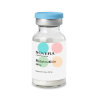
BPC-157 & TB-500 Stack USA | Buy BPC-157 + TB-500 5mg | Research-Grade Peptides ≥99% Purity
The BPC-157 and TB-500 research stack combines two of the most extensively studied and mechanistically complementary repair-focused peptides in modern regenerative science — BPC-157, a synthetic 15-amino acid gastric-derived pentadecapeptide operating through simultaneous NO system, VEGFR2, and FAK-paxillin pathway activation, and TB-500, a synthetic 43-amino acid Thymosin Beta-4 peptide operating through G-actin sequestration and actin cytoskeletal regulation — studied together across wound healing, musculoskeletal repair, cardiovascular biology, neuroprotection, and broad tissue repair research for their complementary multi-pathway repair biology that engages fundamentally distinct but synergistically acting cellular repair mechanisms simultaneously — making this combination one of the most pharmacologically rational and actively researched dual-peptide repair stacks in modern pre-clinical regenerative science. Researchers and institutions across the USA can source verified, research-grade BPC-157 5mg + TB-500 5mg with fast domestic dispatch and full batch documentation included on both vials.
✅ ≥99% Purity — HPLC & Mass Spectrometry Verified
✅ Batch-Specific Certificate of Analysis (CoA) Included on Both Vials
✅ Sterile Lyophilised Powder | GMP Manufactured
✅ Fast Dispatch Across the USA | USA Peptides In Stock
What Is the BPC-157 + TB-500 Research Stack?
The BPC-157 + TB-500 research stack pairs two of the most biologically active, mechanistically well-characterised, and pre-clinically validated repair-promoting peptides available in modern regenerative science — combining their distinct and complementary mechanisms into a dual-peptide research system that engages tissue repair biology at multiple levels simultaneously.
BPC-157 — Body Protection Compound 157 — is a synthetic 15-amino acid pentadecapeptide derived from a protective protein found in human gastric juice. Its defining pharmacological feature is its simultaneous multi-pathway mechanism — engaging the nitric oxide (NO) system, VEGFR2-mediated angiogenic signalling, and FAK-paxillin cytoskeletal signalling concurrently — producing a broad cytoprotective and repair-promoting profile spanning gastrointestinal mucosal protection, tendon and ligament repair, muscle healing, bone regeneration, angiogenesis, neuroprotection, and wound healing. BPC-157’s gastric origin gives it exceptional stability in biological environments and makes GI mucosal protection its most classically characterised tissue research application — a unique capability not shared by any other repair peptide.
TB-500 — the synthetic form of Thymosin Beta-4 (Tβ4) — is a 43-amino acid peptide that is one of the most abundant intracellular peptides in virtually every nucleated mammalian cell. Its primary mechanism is high-affinity G-actin sequestration through the LKKTET motif — regulating actin polymerisation dynamics, cytoskeletal organisation, and the cell migration that underpins effective tissue repair across multiple cell types. TB-500 is additionally secreted extracellularly in response to injury — functioning as a tissue repair signalling molecule promoting endothelial cell migration, angiogenesis, and multi-tissue repair through cell surface and extracellular matrix interactions. Its most distinctive research strengths lie in cardiac repair and regeneration, corneal wound healing, and the fundamental actin cytoskeletal biology that drives cell motility across virtually all tissue repair contexts.
The scientific rationale for studying BPC-157 and TB-500 in combination is their mechanistic complementarity — they operate through fundamentally non-overlapping biological pathways that address different but synergistically important aspects of the tissue repair process. BPC-157 drives repair through NO-mediated cytoprotection, VEGFR2 angiogenic signalling, and FAK-paxillin cytoskeletal modulation. TB-500 drives repair through actin sequestration, G-actin/F-actin equilibrium regulation, and the actin dynamics-dependent cell migration that delivers repair cells to injury sites. Together they engage the repair process at the level of both vascular biology (through complementary angiogenic mechanisms), cytoskeletal dynamics (through both FAK-paxillin and actin sequestration pathways), and cytoprotective signalling (through NO system and Tβ4-mediated anti-inflammatory biology) — producing a multi-level repair research system more comprehensive than either peptide alone.
What Does the BPC-157 + TB-500 Stack Do in Research?
In controlled pre-clinical and laboratory settings, the BPC-157 + TB-500 combination has been studied across a wide range of regenerative, tissue biology, and pre-clinical repair research applications:
Complementary Angiogenesis Research Both BPC-157 and TB-500 promote angiogenesis through distinct mechanisms — BPC-157 through VEGFR2 signalling modulation and TB-500 through endothelial cell migration promotion via actin dynamics regulation. Studies examining both compounds in wound healing and tissue repair models have explored how these complementary pro-angiogenic mechanisms interact — examining whether dual pathway angiogenic stimulation produces additive vascular support for tissue repair compared to either compound alone.
Multi-Pathway Cytoskeletal Research BPC-157 modulates cytoskeletal signalling through the FAK-paxillin pathway — affecting cell adhesion complex dynamics and mechanosensing. TB-500 modulates cytoskeletal organisation through G-actin sequestration — directly regulating actin filament dynamics and polymerisation. Research examining both compounds explores how these complementary cytoskeletal mechanisms interact in cell migration and repair biology — providing a dual-pathway tool for studying the relationship between FAK-paxillin signalling and actin dynamics in tissue repair contexts.
Wound Healing Research Both BPC-157 and TB-500 are individually among the most active wound healing peptides in pre-clinical research — and combination studies have examined how their complementary mechanisms affect wound closure kinetics, granulation tissue quality, collagen deposition, and epithelial re-covering in skin and soft tissue injury models. Research has explored whether the combination engages more wound healing pathways simultaneously than either peptide alone.
Musculoskeletal Repair Research Both peptides have independently documented pre-clinical activity in musculoskeletal repair models — BPC-157 in tendon, ligament, and muscle repair, and TB-500 in muscle repair and actin cytoskeletal biology. Combination research has examined how their complementary repair mechanisms affect musculoskeletal healing parameters — exploring the interaction between NO system and VEGFR2-mediated repair signalling and actin dynamics-driven cell migration in muscle and connective tissue healing models.
Cardiovascular Research TB-500’s particularly strong cardiovascular repair profile — including its well-characterised cardioprotective and cardiac regeneration-promoting effects — combined with BPC-157’s multi-pathway cytoprotective activity has driven research examining the combination in pre-clinical cardiac biology models — exploring how actin-based cardiac progenitor cell migration and multi-pathway NO/VEGFR2 cytoprotection interact in models of cardiac ischaemia and repair.
Neuroprotection Research Both BPC-157 and TB-500 have independently documented neuroprotective effects in pre-clinical CNS models — and combination research has examined how their complementary neuroprotective mechanisms interact in brain and spinal cord injury models, exploring whether simultaneous multi-pathway neuroprotection produces enhanced neuronal survival and functional recovery parameters.
Anti-Inflammatory Research BPC-157 modulates the NO system with anti-inflammatory consequences, and TB-500 exerts anti-inflammatory effects through macrophage activity modulation and cytokine regulation. Studies examining the combination have explored how these complementary anti-inflammatory mechanisms interact in the inflammatory microenvironment of healing tissue — with the inflammatory phase of tissue repair considered a key area where dual-mechanism anti-inflammatory activity may engage multiple pathways simultaneously.
GI Biology Research BPC-157’s classically characterised GI mucosal protective activity — driven by NO system engagement and multi-pathway cytoprotection — represents a research area where TB-500’s actin-based cell migration promotion may complement GI epithelial repair biology. Combination research has examined how actin dynamics-driven GI epithelial cell migration interacts with BPC-157’s GI mucosal protective signalling in GI repair models.
Combination Repair Protocol Research The BPC-157 + TB-500 combination is used as a model dual-mechanism repair system in pre-clinical research examining the general question of whether mechanistically complementary repair peptide combinations produce additive or synergistic tissue repair outcomes compared to individual peptide administration — contributing to the broader research field of multi-peptide combination repair biology.
All applications are for research purposes only. BPC-157 and TB-500 as supplied are not intended for human therapeutic use.
Be the first to review “BPC 5mg + TB 5mg”
Related products

Ophthalmology

Reviews
There are no reviews yet.